From stock uncertainty to a more reliable workflow
ERP can connect purchasing, stock and fulfilment so your team can plan around recorded information rather than guesses and disconnected updates.
NextERP · · 2 min read
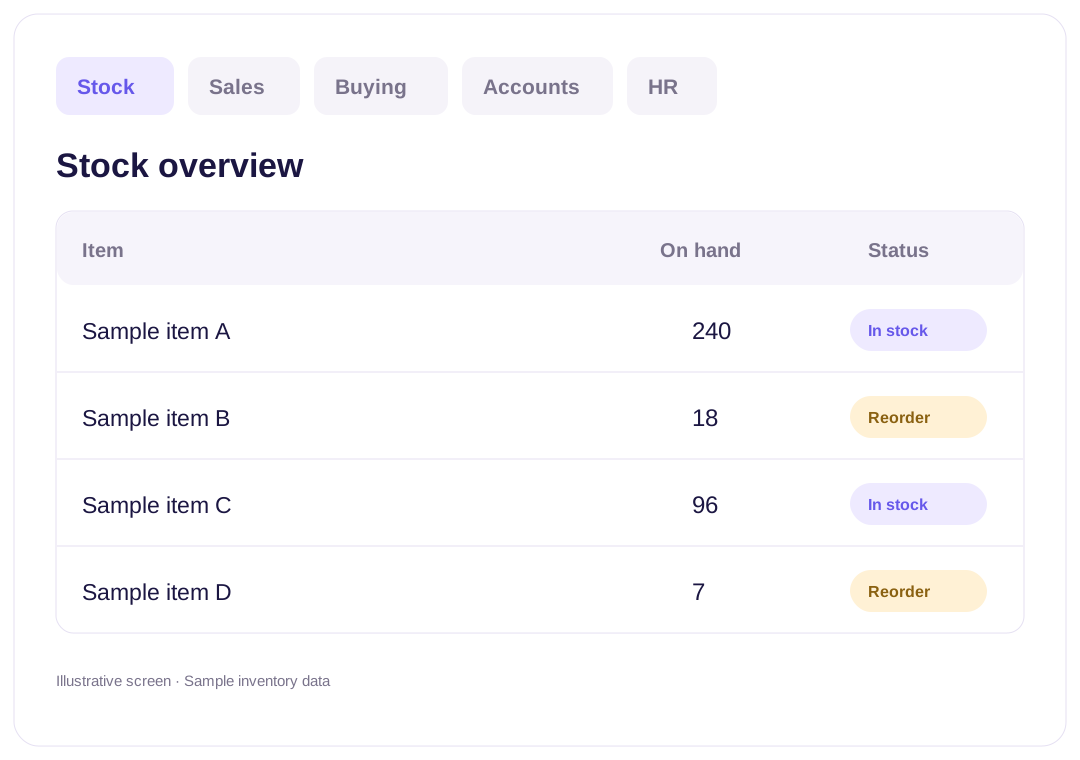
Available stock should be a shared answer
Businesses that buy, make or sell physical products need a dependable view of their stock. A quantity recorded last week is not enough if deliveries, transfers and customer commitments have changed since then.
An ERP brings those events together. Receipts, stock movements and outgoing deliveries become part of an operational record that teams can review. Good results depend on recording the movement consistently and setting up the locations, items and responsibilities correctly.
What better visibility changes
Purchasing can plan with more context. Buyers can review current stock, outstanding orders and supplier information before placing another order.
Sales can communicate more clearly. The team can investigate availability and delivery status using the same records used by the warehouse.
Operations can follow exceptions. A delayed receipt, missing quantity or uncompleted transfer becomes something to investigate rather than another adjustment in a private spreadsheet.
Managers can ask better questions. Which items move regularly? Where is stock accumulating? Which suppliers need closer attention? Reporting becomes more useful when the underlying transactions are kept current.
Success story: Rayya Investment
Rayya Investment is a uniforms and workwear business in Papua New Guinea. In Frappe's published story, Tridots Tech helped it introduce ERPNext using buying, selling, stock and accounts, with selected customisation. The account describes stronger inventory visibility, procurement coordination and sales reporting.
The case is useful because it shows a focused implementation: core operations came first, with room to expand later. It is an independently documented ERPNext customer story, rather than a NextERP project.
Read Frappe's Rayya Investment story.
Software and working habits go together
A reliable stock system needs clear item codes, sensible warehouse locations and a routine for recording transactions. Importing messy data into new software does not make it dependable. Training the people who receive, transfer and deliver goods is part of the implementation.
A useful first project might connect a purchase order, the receipt of goods and a customer delivery. Once that flow works consistently, the team can expand into replenishment rules, batch tracking or manufacturing where those features suit the business.
A practical starting checklist
- Agree on the items and locations that will be managed.
- Review opening quantities and the quality of existing data.
- Decide who records each movement and when.
- Test a complete purchase-to-delivery workflow.
- Review exceptions with the people doing the work.
NextERP can help configure ERPNext around those day-to-day requirements and support the team through adoption. Start a conversation, or call 1300 19 77 99.